
You don’t see water spraying. You don’t see a puddle. But something’s wrong.
Your water bill jumped 30% for no reason. There’s a musty smell in your closet. A corner of the ceiling feels damp. These tiny signs often mean one thing: you’ve got a hidden water leak somewhere in your Compton home.
The scary part? By the time you notice these signs, water’s probably been causing damage for weeks. Maybe months.
This guide walks you through what hidden leaks look like, how to spot slab leaks before they destroy your foundation, and exactly when to call for professional water leak detection in Compton. The faster you catch it, the less your home pays the price.
Why Hidden Leaks Are So Dangerous
Most water damage doesn’t announce itself.
A pipe doesn’t burst. Your whole house doesn’t flood. Instead, water drips. Slowly. Behind walls. Under floors. Inside your slab foundation. You can’t see it. But it’s working.
Water’s patient. It seeps into wood. It saturates insulation. It feeds mold growth. It weakens concrete. It damages electrical wiring. And because you can’t see it, you think everything’s fine while your home’s literally rotting from the inside.
Then one day you notice a stain. Or the floor feels soft. By that point, damage is already serious.
Here’s what most homeowners don’t realize: water damage accelerates. Slow leak for months? Not a huge disaster. Slow leak for a year? Structural problems. Foundation cracking. Mold taking over. Thousands in repair costs.
That’s why catching hidden leaks early is about protecting your home’s actual foundation, not just preventing inconvenience.
The Warning Signs Most People Ignore
Your water bill jumps. You assume it’s an error. You don’t call anyone.
You hear running water inside the walls when nothing’s on. You think it’s weird. Then you forget about it.
You notice a soft spot on the ceiling. You push on it. Water comes out. But the room above seems dry, so you assume it’s just humidity.
All of these are screaming red flags. Your home’s telling you something’s wrong. And most homeowners ignore them.
These are the signs you should never ignore:
Your water meter keeps moving even when nothing’s running. Not a little movement. Constant movement. That’s water going somewhere you don’t want it going.
Water stains appearing on ceilings or walls. Brown or yellowish stains especially. That’s old water. Water that’s been there long enough to oxidize. Not a fresh leak. An established problem.
Musty, moldy smells in rooms. Especially if they’re not bathroom or basement. That smell means moisture’s accumulated somewhere. Mold’s already growing. You just can’t see it yet.
Damp spots on floors or walls. Not wet. Damp. Like the wood’s absorbed water and won’t dry.
Soft drywall when you press on it. It should be hard. If it’s spongy, it’s saturated. Structural damage is happening.
Visible mold anywhere. Not just in bathrooms. This means persistent moisture. A leak somewhere.
Any of these = call a professional for water leak detection in Compton. Not next week. Not “I’ll see if it gets worse.” Now.
Slab Leaks: The Foundation Problem You Can’t Ignore
Your home sits on concrete. Pipes run through that concrete. Hot water line. Cold water line. If one breaks under there?
You’ve got a slab leak.
This is the worst-case leak scenario because you can’t see it. The water just spreads under your foundation. Slowly weakening the concrete. Washing away soil. Making the ground settle unevenly. Your foundation cracks. Your floors crack. Doors stop opening properly. The whole house starts shifting.
And you might not even know it’s happening.
Watch for these slab leak signs:
You walk on the floor and feel a warm spot. Like someone heated that tile or wood. Hot water line’s leaking under there. That shouldn’t be warm.
Cracks in tile, grout, or concrete appearing out of nowhere. Not from settling. These are new. Often happens when water’s undermining the foundation.
Your water bill spiked and you have no idea why. Nobody’s using more water. You’re not watering the yard more. A pipe’s leaking under the slab, sending water straight into the ground.
You hear water running inside the concrete. Seriously. Put your ear to the floor. Listen carefully. If you hear trickling inside the slab, water’s definitely flowing where it shouldn’t.
Low water pressure that’s gotten worse over weeks. A slowly-failing slab leak starts by restricting flow. Pressure drops. You might not connect it to a leak at first.
The scary thing: once a slab leak starts, it doesn’t stop. The water keeps flowing. The damage keeps accelerating. You catch it today or you deal with foundation repair costs in the thousands.
Slab leaks need professional water leak detection in Compton because you can’t fix what you can’t see or reach easily. Plumbers use specialized equipment to find them. Then the repair usually means breaking the concrete and replacing the pipe, or rerouting around the slab.
Not cheap. But way cheaper than ignoring it and having your foundation fail.
Ceiling Water Damage: What It’s Really Telling You
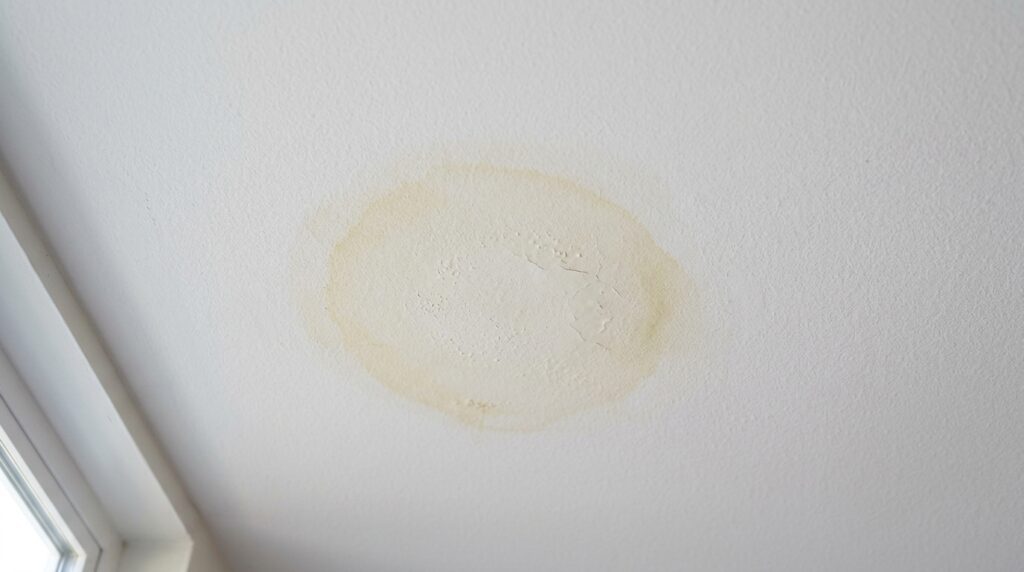
You look up. There’s a stain on the ceiling. Yellowish or brown.
That’s not just cosmetic. That stain is proof that water’s been up there. Soaking. Dripping. Maybe for a long time.
Could be a roofing leak. Could be pipes on the floor above. Could be condensation from an AC line. Doesn’t matter. Water’s there. And water on ceilings means water’s damaging the structure.
Here’s what ceiling water damage usually indicates:
Drywall’s absorbing water. Drywall’s designed to be dry. When it gets wet, it starts breaking down. The gypsum core falls apart. Mold loves it. Once mold takes hold in drywall, you basically have to replace that whole section.
There’s insulation above the ceiling. If water’s dripping through, the insulation’s soaked. Wet insulation stops insulating. Your heating/cooling becomes inefficient. Your energy bills go up. Plus, moldy insulation’s a health issue.
The framing (wood beams holding up the ceiling) is probably absorbing water too. Wood rots. Not immediately. But over time, wet wood weakens. Compromises structural integrity.
If the ceiling’s sagging or feels soft, structural damage is already happening. This is urgent.
Don’t assume it’s minor. A small stain means water’s been flowing for a while. Call someone to look at it. A professional can figure out where the water’s coming from. Maybe it’s fixable quickly. Maybe you’ve got a bigger problem hiding upstairs.
Either way, you need to know.
How Professionals Actually Find Leaks You Can’t See
You can’t find a hidden leak by walking around your house. It’s hidden. That’s why it’s hidden.
But professionals have tools that change the game.
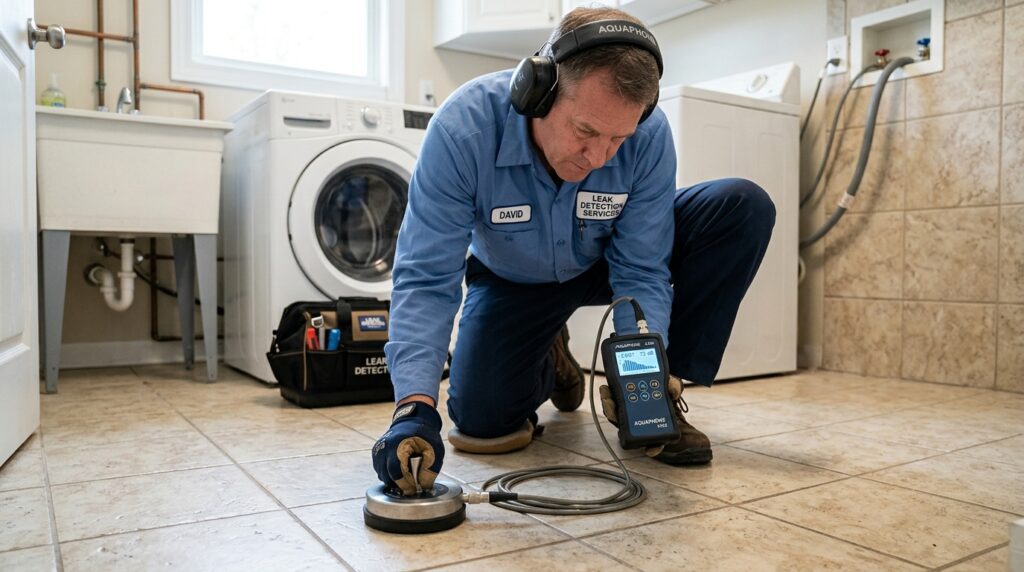
Acoustic listening devices pick up the sound of water moving through pipes or escaping under pressure. Different leaks make different sounds. A trained plumber listens and locates exactly where water’s going.
Thermal imaging cameras show temperature differences. A leak in a hot water line shows up as a warm spot. A leak in a cold line shows as a cold spot. You literally see where the water is.
Moisture detection equipment finds water absorbed into walls, floors, and concrete. You might not feel damp, but equipment detects it.
Pressure testing helps isolate whether water’s leaking from the supply line (pressurized) or the drain line (gravity flow).
Dye testing and smoke testing can trace water flow visually.
Modern water leak detection in Compton doesn’t require smashing walls. Doesn’t require guessing. Equipment finds the exact location. Then repair is targeted and minimal.
This is why professional leak detection matters. A plumber doesn’t guess. They know where the leak is and why it’s happening.
When a Leak Becomes an Emergency
Not all leaks require emergency response. A slow drip under the sink can wait until morning.
But some situations need immediate action.
Call for emergency water leak service right now if:
Water’s actively pooling on floors or dripping into rooms. You can see the water coming. This is spreading damage by the hour.
Drywall feels spongy or soft when you press it. Structural integrity’s compromised.
Visible mold’s growing. Not dust. Not discoloration. Actual mold. This is a health hazard plus water damage.
Water’s anywhere near electrical outlets, panels, or wiring. Water + electricity = danger. Serious danger.
The leak’s in a wall or under the floor and you can’t shut it off. You turned off the main water and water’s still coming. That’s sewage or contaminated water. Emergency situation.
You see cracks forming in walls or foundation. The structure’s failing. This is urgent.
When in doubt, call. An emergency plumber in Compton can assess whether it’s actually urgent or if it can wait. But if you’re asking whether you should call immediately, you should probably call.
The DIY Leak Repair Trap
You see water under the sink. You grab some duct tape. Or you wrap the pipe with a towel. Maybe it stops dripping temporarily.
You think you’ve fixed it.
You haven’t.
A visible leak under a sink might seem simple, but often it’s a symptom of something bigger. The fitting’s loose because the pipe’s corroded. The crack’s there because water pressure’s too high. The leak’s returning because you treated the symptom, not the cause.
Plus, water moves. You slow a leak in one place, the pressure builds elsewhere and causes a new leak.
Hidden leaks? Forget DIY. You can’t see them. You can’t know if your patch is holding. You can’t know if mold’s already growing behind it.
This is where professional water leak detection in Compton becomes essential. A plumber doesn’t patch and hope. They find the actual problem. They fix it properly. They test it to make sure it’s fixed.
How to Catch Leaks Before They Destroy Your Home
You can’t prevent all leaks. But you can catch them early.
Know where your main shut-off valve is. Test it. Make sure it works. If something catastrophic happens, you need to stop water flow immediately.
Check your water bill monthly. Not just to pay it. Actually look at the number. If it suddenly jumps and you haven’t changed usage, you probably have a leak.
Listen to your house. Weird sounds in walls? Running water when nothing’s on? Investigate.
Look under sinks regularly. Feel the wood underneath. Is it damp? Soft? Discolored? Catch leaks early.
Watch for stains. Walls, ceilings, floors. Stains mean water was there. Find out why.
Maintain your water pressure. Very high pressure (over 80 PSI) stresses pipes and causes leaks. A plumber can test and regulate it.
Get an inspection every couple years. Especially in older Compton homes. A professional can spot problems you can’t.
Fix small leaks immediately. Don’t wait. That tiny drip becomes a big problem.
None of this is complicated. You’re just paying attention and taking small problems seriously before they become disasters.
Frequently Asked Questions
What exactly is water leak detection in Compton?
It’s using specialized equipment to find water leaks you can’t see. Acoustic devices, thermal cameras, moisture sensors. A professional plumber locates the exact leak without tearing apart walls unnecessarily. Once found, pipe leak repair in Compton can be targeted and efficient instead of guesswork.
How do I actually know if I need pipe leak repair?
Rising water bills. Water sounds inside walls. Musty smells. Soft spots on floors or walls. Visible water stains. Mold. Any of these means water’s where it shouldn’t be. Call someone to assess. Some issues are fixable quickly. Some need immediate attention. But all of them deserve professional eyes.
Are slab leaks really as bad as they sound?
Yes. A slab leak slowly destroys your foundation. Water undermines concrete. Makes the ground settle unevenly. Your foundation cracks. Your whole home shifts. By the time you notice visible damage, structural repair costs tens of thousands. Catching slab leak signs early prevents foundation failure.
How long does professional leak detection actually take?
Depends on how complex the leak is. Simple cases? A few hours. Harder cases? Full day. But modern equipment speeds things up. Professional leak detection in Compton is way faster than tearing apart walls guessing where the leak is.
Does insurance cover water leak damage?
Sudden, accidental water damage? Usually yes. Damage from long-term neglect or a leak you knew about and ignored? Usually no. Check your policy. Call your insurance after calling a plumber. Document everything with photos. Speed matters for coverage.
Why is finding leaks early actually cheaper than waiting?
A small leak repair might cost $300 to $500. That same leak ignored for a year? Could cost $5,000 in structural repair, mold removal, and replacement. Water damage accelerates. Catch it now or pay way more later. Emergency water leak service costs more money too. Prevention beats emergency response every time.