
Your toilet’s running constantly. The kitchen faucet drips. You hear water sounds in the walls.These aren’t emergencies. But they’re not going away either. And ignoring them usually makes them worse.
General plumbing repairs in Compton are the backbone of home maintenance. Most of them aren’t dramatic. They’re just annoying. A leaky faucet. A running toilet. A slow drain. Pipe corrosion you didn’t know about. They pile up and either get fixed or they become bigger, more expensive problems.
This guide walks you through the most common repairs Compton homeowners deal with, what you might be able to handle yourself, what definitely needs a professional plumber in Compton, and what it’s going to cost. By the end, you’ll know whether you’re looking at a quick fix or a real repair job.
The Most Common Repairs Plumbers Handle in Compton
Same problems. Over and over.
A plumber in Compton could probably predict your issue before you describe it. Toilet running constantly. Faucet dripping. Slow drain. Water heater acting weird. Weak water pressure. These show up constantly because homes age, pipes wear out, and fixtures break.
The good news? Most of these are fixable. Some are fixable by you. Most need a professional. But none of them are mysteries. A plumber in Compton has fixed your exact problem hundreds of times.
That means you’re getting actual solutions, not guesswork.
Leaky Faucet Repair: The Annoying Problem You Can Sometimes Fix
That drip. Drip. Drip.
All night. Every night. It drives people crazy. Plus, a leaking faucet wastes water and money. Over a year, a single dripping faucet can waste thousands of gallons.
Why faucets leak:
Most of the time it’s a worn-out washer or cartridge. The part inside the faucet that creates the seal wears down. Water seeps past it. Drip.
Sometimes the valve seat itself is corroded or damaged. The water doesn’t seal properly against it anymore.
Sometimes it’s just a loose connection. The nut holding the faucet is slightly loose. Water seeps.
Can you fix it yourself?
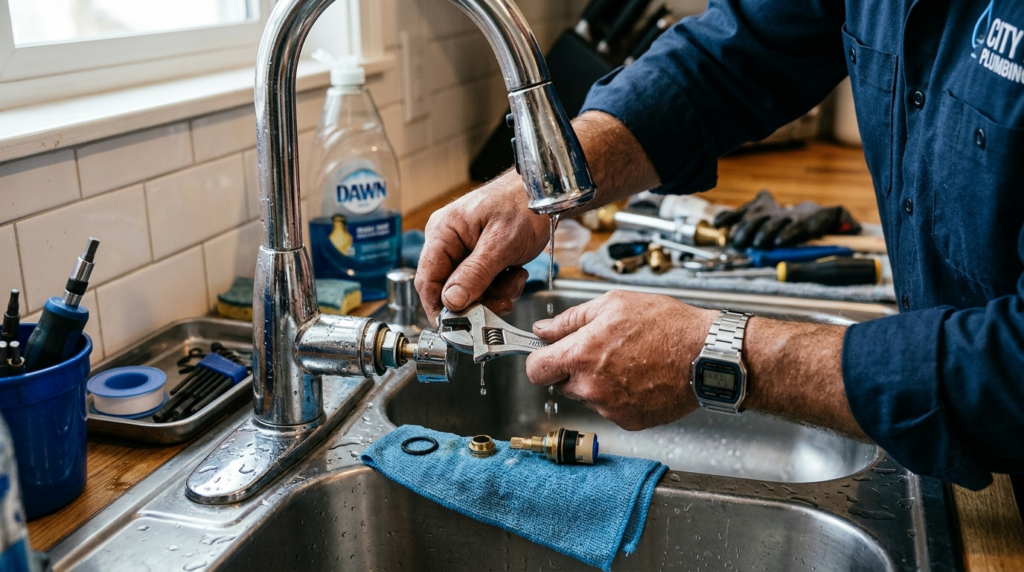
Maybe. If it’s a simple washer replacement, some homeowners can do it. Shut the water off under the sink. Disassemble the faucet handle. Replace the washer. Reassemble. Done.
That’s the best-case scenario. Cost: $5 to $20 for parts. Time: 30 minutes if you’re patient.
But if the cartridge’s damaged? If the valve seat’s corroded? Now you need specialty parts. Or the whole faucet needs replacing. That’s when it becomes a plumber job.
Here’s the reality: If you’re mechanically comfortable and it’s a obvious fix, try it. If it keeps leaking after you fix it, or if you open it up and have no idea what you’re looking at, call a plumber in Compton. A professional handles it in 30 minutes. You’ve already spent an hour getting frustrated.
Toilet Repair: The Problem That Wastes Your Money While You Sleep
A running toilet is insidious. You don’t notice it. Water’s just constantly flowing from the tank into the bowl. All night. All day. You’re literally flushing money down the toilet.
The worst part? You can’t hear it if you’re upstairs or in another room.
Why toilets run:
The fill valve gets stuck or wears out. Water keeps flowing into the tank instead of shutting off.
The flapper (the rubber disc at the bottom of the tank) cracks or warps. Water flows from the tank into the bowl constantly.
The flush valve’s corroded. Same result.
Quick fixes that sometimes work:
Lift the tank lid and look inside. If the float (the bobber thing) is stuck, lift it gently. Sometimes it frees up and stops the flow.
If the flapper’s slightly out of position, adjust it.
If the fill valve’s stuck, try jiggling the handle or the fill valve itself. Sometimes it unsticks.
These are 30-second fixes if you’re lucky.
When to call a plumber:
If the quick tricks don’t work, you need parts replaced. New flapper. New fill valve. New flush valve. These cost $50 to $150 in parts. A plumber in Compton installs them in under an hour.
DIY? You can buy the parts and watch a YouTube video. It’s doable if you’re comfortable taking the toilet tank apart. But if you mess up, you’ve got a broken toilet instead of a running one.
Not catastrophic, but frustrating. Better to call someone.
Pipe Repair in Compton: When Your Pipes Start Failing
A small leak. A crack. Corrosion eating through.
Pipes don’t last forever. Especially in Compton homes where the soil shifts and water’s mineral-heavy.
Common pipe problems:
Corrosion inside old pipes. Galvanized steel rusts. Copper oxidizes. PVC gets brittle. As pipes age, metal gets thinner. Eventually, water finds its way through.
Loose fittings where pipes connect. Vibration over years loosens connections. Water seeps.
High water pressure stresses pipes. Over time, cracks develop. Pinhole leaks appear.
Ground movement shifts pipes. Stress points develop. Cracks form.
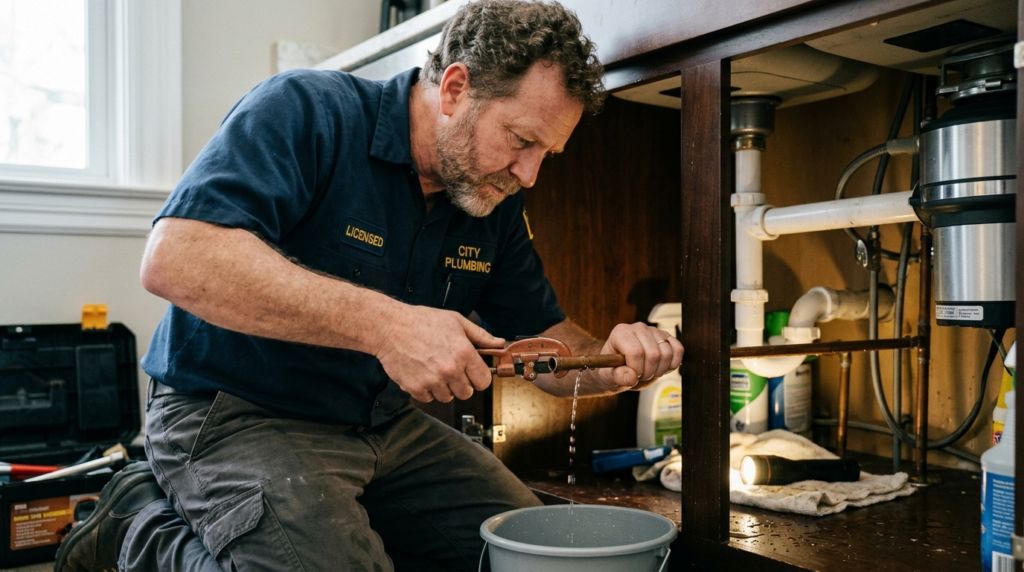
Visible leaks (water under the sink, behind appliances) are usually fixable with a new fitting or section replacement. Cost: $200 to $500 typically.
Hidden leaks (you see a stain but can’t find the source) need professional water leak detection. Then repair depends on where and how bad it is.
Corrosion throughout the system is a bigger problem. If your home’s 50+ years old and original pipes are failing, you might need a full system replacement. That’s $5,000 to $20,000 depending on the house.
This is where preventive maintenance helps. A plumber in Compton inspects your pipes, spots problem areas before they fail, and you decide whether to replace them now or wait.
Fixture Installation: Upgrading Your Bathroom or Kitchen
You want a new faucet. A new showerhead. A new toilet because the old one’s ugly.
Fixture installation is straightforward if the plumbing’s already there. Remove the old fixture. Install the new one. Done.
What costs money:
If the plumbing’s not where you want it, you might need pipe work. Moving a sink location? That requires new supply lines and drainage. Now it’s a real installation project, not just swapping fixtures.
If the old fixture’s corroded or stuck, removal takes longer than expected.
If the new fixture requires special installation (a bidet toilet, for example), more expertise is needed.
DIY potential:
Simple fixture swaps? Some homeowners handle them. Shut the water off. Disconnect the old fixture. Connect the new one. Turn water back on. Test.
More complex work? Call a plumber. They’ve got the right tools. They know how to avoid damage. They can spot problems (like corroded pipes) while they’re working.
Installation costs vary. $100 to $300 is typical for basic work. More complex installs run higher.
Water Heater Repair vs Replacement: The Big Decision
Your water heater’s acting weird. Water’s not hot. It’s making sounds. It’s leaking.
Water heater problems fall into two categories: fixable or replacement.
Repair situations:
The thermostat’s set too low. Turn it up. Problem solved. Free.
The heating element’s failing. Can be replaced. Cost: $300 to $500.
There’s sediment buildup inside. Flushing helps. Cost: $150 to $300.
A valve’s broken. Replace it. Cost: $100 to $400.
Replacement situations:
The tank’s corroded and leaking. Can’t patch a corroded tank. New water heater. Cost: $800 to $2,500 depending on size and type.
The heater’s 15+ years old and failing. At that age, repair costs add up. Better to replace. Cost: as above.
The heater doesn’t produce enough hot water anymore. The heating element’s worn out. Could replace the element (expensive), or just get a new unit (cost-effective).
How to know which path:
A plumber in Compton can diagnose it. If repair costs are under $500 and the heater’s under 10 years old? Usually worth fixing. If repair costs are over $500 and the heater’s 12+ years old? Probably time to replace.
Think about it like a car. If you’re paying $600 to fix a 15-year-old heater when a new one costs $1,500, that repair bought you maybe two more years. New heater lasts 10+ years. The math favors replacement.
Preventive Plumbing Maintenance: Stop Problems Before They Start
You can’t prevent all plumbing problems. But most of them? You can catch early.
Here’s what actually works:
Know your water pressure. High pressure (over 80 PSI) damages pipes. A plumber can test it. If it’s high, a regulator fixes it. Cost: $150 to $300. Saves you thousands in pipe repairs later.
Check your water bill monthly. Sudden jumps mean a leak somewhere. Catching leaks early prevents water damage.
Inspect under sinks and around appliances regularly. Look for moisture. Soft spots. Discoloration. These are early warning signs.
Listen to your system. Strange sounds? Banging? Gurgling? Weird noises often mean something’s about to fail. Address it before it does.
Get your system inspected every couple years. Especially if your home’s older. A professional spots corrosion, weak pipes, failing fixtures before they become emergencies.
Don’t ignore small leaks. A drip now is a flood later.
Avoid chemical drain cleaners. They damage old pipes. Use a plunger instead.
These aren’t expensive. They’re not complicated. But they catch problems early when fixes are cheap and easy instead of later when they’re expensive and complicated.
When to Call a Plumber vs DIY
The honest answer? It depends on your comfort level and the complexity.
You can probably handle:
Cleaning a drain with a plunger. Totally DIY.
Replacing a faucet aerator (the screened part at the end). Takes 30 seconds.
Replacing a toilet flapper. If you’re comfortable inside the tank, do it.
Cleaning out P-trap debris. Basic stuff.
You should probably call a plumber:
Anything involving turning off the main water line. If you’re not sure, call.
Fixing pipes. Even “simple” patches often fail under pressure.
Installing new fixtures if it requires new plumbing or modifications.
Any repair that repeats. If you fixed it and it broke again, something deeper is wrong.
Anything underground or in the walls. You don’t know what you don’t know.
Water heater work. These are pressure vessels. Mistakes are dangerous.
The real test: If you’re asking “Should I DIY this?” it’s probably a plumber job. Confident DIYers don’t ask. They just do it or they call someone.
What to Expect When You Call a Plumber in Compton
You pick up the phone. You’re nervous about the cost. You wonder if you’re being scammed.
Here’s how it should go:
When you call: Describe the problem. A good plumber asks clarifying questions. When did it start? Is water pooling? Is it under control? They’re not judging. They’re assessing whether it’s urgent.
The appointment: You get a time window. Plumber shows up. Assesses the problem. Explains what’s wrong in plain English. Not jargon. Gives you options and pricing.
The estimate: Before any work starts, you should know the cost. No surprises. If something unexpected comes up during work, they tell you before proceeding.
The repair: They do the work efficiently. Tests it to make sure it works. Cleans up. Shows you what they fixed.
The invoice: Clear breakdown of labor, parts, and total. No mystery charges.
That’s how it should work. If a plumber in Compton isn’t doing all this? Look elsewhere.
General Plumbing Repairs Cost: What to Budget
Simple repairs (faucet washer, flapper replacement): $100 to $250
Fixture repair or replacement: $200 to $600
Pipe repair (small section): $300 to $800
Drain cleaning: $150 to $400
Water heater repair: $300 to $600
Water heater replacement: $800 to $2,500
Installation work: varies widely depending on complexity
These are ballpark figures. Your actual cost depends on the problem’s complexity, your plumber’s rates, and your location within Compton.
Always get a written estimate. Compare prices if it’s a big repair. But don’t choose the cheapest option just because it’s cheapest. The cheapest plumber often has the worst reviews.
Frequently Asked Questions
What’s the most common plumbing repair you see in Compton?
Leaking faucets, running toilets, and slow drains are the big three. After that, it’s water heater issues and corroded pipes. Most of these develop gradually. Homeowners notice them but put off fixing them. Then they call when it gets worse. Catching these early makes them way cheaper to fix.
Can I actually fix my own plumbing or should I always call someone?
Some simple stuff is DIY-friendly if you’re comfortable. Cleaning a clogged drain with a plunger. Replacing a toilet flapper. These are low-risk. But anything involving major plumbing work, water pressure, or installation? Call a plumber. The cost of mistakes often exceeds the plumber’s fee. Plus, pros guarantee their work. DIY doesn’t come with guarantees.
How much should I expect to spend on general plumbing repairs?
Depends entirely on the problem. A simple repair might be $150. A complex one might be $1,000+. Always get a written estimate before work starts. A good plumber in Compton explains what’s wrong and what it costs before touching anything. Don’t pay cash without an invoice. Get it in writing.
When should I replace versus repair plumbing fixtures and pipes?
That’s a plumber’s call, honestly. Generally: if repair costs are under half the replacement cost and the item’s under 10 years old, repair it. If repair costs are high and the item’s old, replace it. For water heaters especially, age matters. A 15-year-old heater might not be worth fixing. A 5-year-old one probably is.
How often should I get my plumbing inspected?
Every couple years for homes over 30 years old. Every 3-5 years for newer homes. If you’ve noticed problems, get it checked sooner. A professional inspection catches corrosion, failing pipes, and weak spots before they become emergencies. Prevention is way cheaper than emergency repair.
Why does my plumber charge so much for service calls?
You’re not paying for 30 minutes of work. You’re paying for expertise, tools, training, and liability insurance. A professional plumber spent years learning their trade. They carry insurance in case something goes wrong. Their tools cost thousands. And they guarantee their work. That’s what the service fee covers. It’s not just for the time in your house it’s for knowing how to fix it right.