Your restaurant’s drain backs up during Friday lunch rush. Customers walk out. Your office restrooms flood, and productivity tanks for the day. A pipe breaks in your warehouse, and you’re scrambling.
Here’s what business owners don’t always realize: commercial plumbing failures aren’t just annoying. They’re revenue killers. And they usually happen at the worst possible time.
This guide explains what commercial plumbing actually involves, why it’s different from residential work, and how to keep your business running instead of dealing with emergency repairs that cost double and kill your reputation.
Why Commercial Plumbing Is Nothing Like Residential Work
Your home’s plumbing and your business’s plumbing operate in completely different universes.
At home? One bathroom. Maybe two. Used by a family. A slow drain’s an inconvenience.
At your business? Multiple bathrooms. Maybe dozens. Employees. Customers. Heavy daily use. A slow drain becomes a health code violation. Multiple backups mean you’re potentially closing the business.
Commercial systems are built differently. Stronger pipes. Higher pressure. Designed for constant use. But that also means when they fail, they fail harder and faster.
A residential leak might drip for weeks. A commercial system failing can shut you down in hours.
Worse: commercial systems are governed by building codes, health codes, and compliance requirements. A residential plumber might handle your home plumbing fine, but they’re not qualified for commercial work. It’s a completely different skill set.
That’s why hiring a commercial plumber in Compton isn’t optional if you want to protect your business. This is where you call someone who understands business operations, not just pipes.
What Businesses Actually Lose When Plumbing Breaks
Let’s talk money because that’s what matters.
A restaurant’s kitchen drain clogs. Can’t clean. Can’t cook. Health inspector shows up. You’re closed for the day. That’s $5,000 to $15,000 in lost revenue. Maybe more depending on your volume.
An office building’s restrooms back up. Employees can’t use bathrooms. Productivity drops. Customers using the space get uncomfortable. Some clients don’t come back.
A retail store’s plumbing fails. Customers see the problem. They leave. They post about it online. Your reputation takes a hit.
A warehouse has a water leak. It damages inventory. Equipment breaks. You’re doing emergency repairs while trying to replace product.
Commercial plumbing services aren’t a luxury. They’re business insurance.
And here’s the thing: the cost of prevention is always less than the cost of emergency response. A maintenance visit might cost $300. An emergency repair? $2,000 to $5,000. Plus downtime costs on top of that.
Smart business owners get preventive maintenance. They catch problems before customers experience them.
What Types of Problems Hit Compton Businesses Most
Different businesses have different plumbing nightmares.
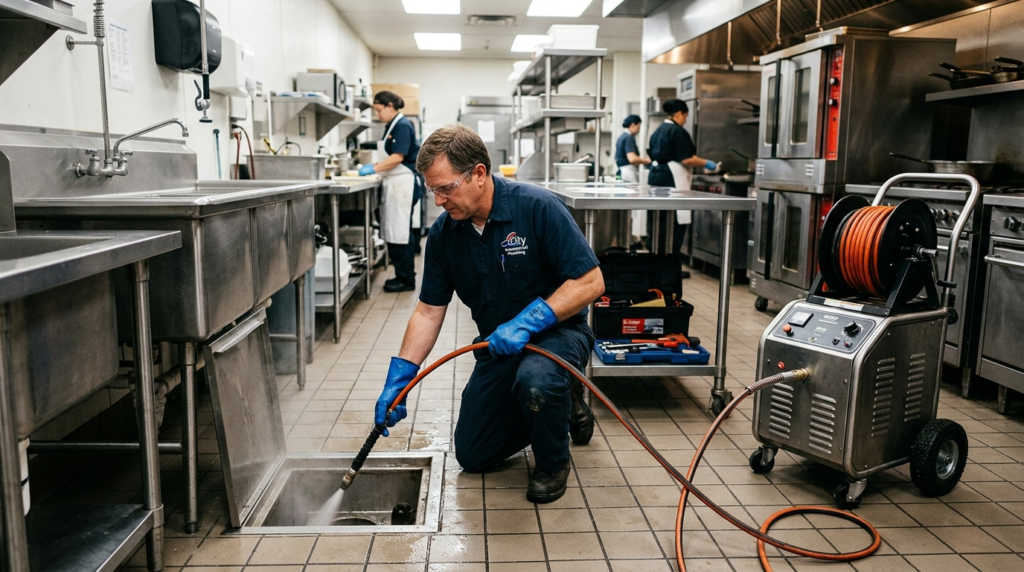
Restaurants: Grease. That’s the killer. Kitchens pump grease down drains daily. It cools. It hardens. It builds up in sewer lines. One day it’s slow. The next day it’s completely blocked. No kitchen = no business. Restaurant plumbing maintenance is non-negotiable if you want to stay open.
Grease trap cleaning? That’s not optional. It’s required. And when businesses skip it? They’re one bad day away from a $10,000+ sewer line repair.
Offices: Broken toilets. Clogged urinals. Sink backups. Seems minor. But think about 200 employees sharing four bathrooms. One backs up and you’ve got a problem. Multiple backups and you’re telling employees to go home early.
Low water pressure’s another killer for offices. People complain about weak showers in the break room. Seems petty until you realize it signals a bigger problem like a leak somewhere in the building.
Retail: Customer-facing bathrooms need to work. Period. Customers expect clean, working facilities. One broken restroom isn’t a disaster. Three broken restrooms and customers are leaving bad reviews before you even realize there’s a problem.
Warehouses: Usually less dramatic until something catastrophic happens. Then it’s water damage affecting thousands of dollars in inventory. Broken pipes in storage areas that go unnoticed for days.
The common thread? Businesses can’t afford to ignore plumbing problems. Because customers notice. Employees notice. And your bottom line suffers.
Why Preventive Maintenance Actually Saves Money
Business owners think: “It’s working fine now. Why call a plumber?”
Translation: “It’s not broken yet, so I’ll wait until it is.”
This logic loses thousands.
Here’s the reality: when you catch a problem early, the fix is simple. A plumber identifies that a pipe’s corroding. Replaces that section. Done. Cost: maybe $500.
You ignore it. The pipe fails. It floods. Water damages walls, ceilings, inventory. Now you’re dealing with emergency repair ($2,000+) plus water damage cleanup ($3,000+) plus lost business time (priceless).
A restaurant with preventive maintenance gets grease traps cleaned regularly. No backups. No downtime. No health code violations.
A restaurant without it gets a catastrophic backup during their busiest day. Kitchen’s shut down. Customers are angry. You’re paying an emergency plumber double rates to dig out your sewer line.
The math is simple: spend $300 on preventive maintenance or spend $10,000+ on emergency repair. Most business owners choose prevention once they do the math.
Commercial Plumbing for Different Business Types
Restaurants need specialized attention. Grease trap service isn’t just recommended. It’s required by health codes. Regular drain cleaning prevents backups before they happen. High-pressure jetting removes stubborn buildup inside sewer lines.
A commercial plumber in Compton who understands restaurant plumbing knows your pain points. They understand peak hours. They schedule maintenance during off-hours so you’re never closed. They know what health inspectors are looking for.
Offices need reliable restroom and drinking water systems. Running toilets waste water and money. Sink backups cost productivity. Hidden leaks damage the building structure slowly. A commercial plumber handles office repair quickly because downtime is expensive. Getting people back to work matters.
Retail Stores need customer-facing plumbing that works. Broken restrooms hurt reputation instantly. A commercial plumber can respond fast and fix problems during off-hours so customers never know there was an issue.
Healthcare Facilities have additional requirements. Sterilization plumbing. Clean water standards. Compliance issues. Not every plumber understands these needs. You need someone who does.
Warehouses can usually tolerate some downtime, but water damage to inventory is catastrophic. Preventive maintenance catches leaks before they destroy product. Quick response limits damage if something breaks.
How to Minimize Downtime When Problems Happen
Prevention’s ideal. But sometimes stuff breaks anyway.
Get a plumber who understands your business. A plumber who understands that your restaurant can’t afford hours of downtime will prioritize speed and efficiency. They’ll know which repairs can wait until after hours and which need immediate attention.
Have someone on your team who knows your system. Where are the main shut-offs? Where are the pressure gauges? If something breaks during your busiest time and you can’t reach your regular plumber, knowing your own system buys time.
Keep your plumber’s number handy. Not just on the phone. Printed. Accessible. Businesses that know who to call immediately get faster response because they’re not shopping for a plumber while the crisis is happening.
Schedule maintenance during off-hours. Preventive work doesn’t have to disrupt operations. Good commercial plumbers schedule inspections and maintenance during times that work for your business.
Ask about same-day service and emergency response. When you’re choosing a commercial plumber in Compton, ask about emergency availability. You need someone who can respond fast when you need them.
What Makes a Commercial Plumber Different From a Regular Plumber
Not all plumbers are qualified for commercial work.
A residential plumber knows homes. They understand residential building codes. They can fix your toilet, clear your drain, replace your water heater.
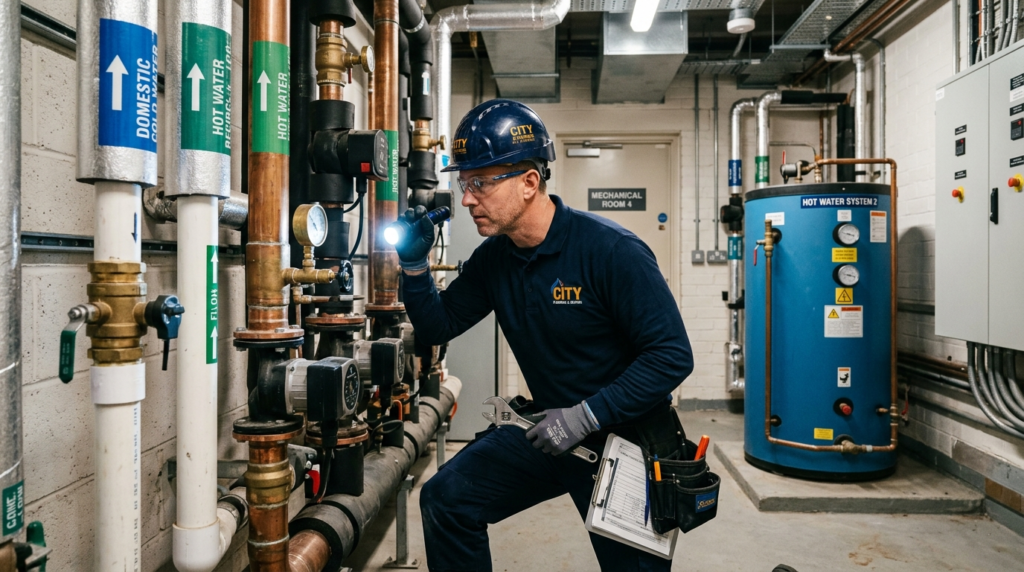
A commercial plumber understands systems. Larger pipes. Higher pressure. Multiple restrooms. Sewer systems designed for heavy load. Building codes that are stricter. Health codes that apply to restaurants and healthcare. They’ve dealt with these systems repeatedly. They know what breaks, why it breaks, and how to fix it right the first time.
A good commercial plumber in Compton also understands your business. They know that taking you down for 8 hours isn’t acceptable. They schedule smartly. They communicate about timelines. They understand ROI because your downtime costs money and that affects your ability to pay them.
A commercial plumber is someone you build a relationship with. You’re not calling a different person every time. You’ve got someone who knows your building, knows your systems, and knows your business.
What You Should Demand From Your Commercial Plumber
Before you hire someone, make sure they’ve got these things covered:
Proper licensing and insurance. This isn’t negotiable. Your building’s on the line. Your business’s on the line. You need someone licensed and insured.
Experience with commercial systems. Ask how many commercial clients they have. Ask about the types of businesses. A plumber who’s handled a hundred residential jobs might not be ready for your commercial restaurant system.
Clear pricing. You should know what you’re paying before work starts. Not surprises after. A good commercial plumber gives you an estimate and sticks to it (assuming nothing unexpected comes up during the work).
Emergency availability. Can they respond nights, weekends, holidays? When you need them, you really need them.
References from other businesses. Not just reviews online. Talk to other business owners who use them. Ask about response times. Ask about reliability. Ask if they’d hire them again.
Communication. Your plumber should explain what’s wrong, what they’re fixing, and why. No jargon you don’t understand. You should know what’s happening to your system.
Frequently Asked Questions
What’s the actual difference between commercial and residential plumbing anyway?
Commercial systems are built for heavier use. Stronger materials. Higher pressure. Multiple facilities. Commercial plumbers understand building codes and health codes. They know how to work with businesses where downtime costs serious money. Residential plumbers fix homes. Commercial plumbers keep businesses running.
How often do commercial systems actually need inspections?
Most businesses should do annual inspections. Restaurants? Every six months due to grease buildup. High-traffic office buildings? Every six months to a year. The more your system gets used, the more frequently you need someone checking it. Think of it like preventive health care for your building.
Can regular drain cleaning actually prevent sewer backups?
Absolutely. Regular drain cleaning removes buildup before it becomes a blockage. For restaurants, it’s essential because grease accumulates. For offices, it catches debris and clogs early. Prevention beats emergency repair every time.
How fast can a commercial plumber actually get here?
Depends on the plumber and their workload. But a good commercial plumbing service in Compton should offer same-day response for emergencies. When your business is losing money by the hour, speed matters. This is why you want a relationship with a plumber before you need one.
Is preventive maintenance actually worth the cost?
Do the math. Preventive visit: $300. Emergency repair: $2,000 to $5,000. Plus downtime costs on top. Most businesses see preventive maintenance as business insurance. One emergency call pays for years of preventive work.
Which industries rely most heavily on commercial plumbing?
Restaurants and food service are the biggest. Health codes require proper plumbing. Offices come next because bathrooms are critical. Retail stores need customer-facing facilities. Healthcare facilities have strict standards. Warehouses care less until something catastrophic happens. Any business with public restrooms or commercial kitchens should have regular service.