If you’ve lived in a Compton home for more than a few years, you’ve probably noticed something. A weak shower. A slow sink. A smell from the drains that won’t go away.
You’re not alone. Every plumber in Compton sees the same patterns over and over. This guide breaks down what’s actually going wrong in Compton homes, why it happens, and what you can do before things get expensive. Some of these you can handle. Most need a professional. But at least you’ll know what’s happening.
Why Do Plumbing Problems Happen So Much in Compton?
Compton homes have a few things working against them.
First: age. Lots of homes here were built 40, 50, even 60+ years ago. Pipes don’t last forever. Copper corrodes. Galvanized steel rusts. PVC gets brittle. After decades, even the best pipes start failing.
Second: ground movement. The soil in parts of Compton shifts with the seasons. Dry periods. Wet periods. That movement puts pressure on pipes buried under your house. Enough stress and pipes crack. Joints separate. Underground leaks start.
Third: water quality. Compton water has minerals in it. Hard water. Over time, mineral buildup inside pipes gets thicker. Flow decreases. Pressure drops. It’s like your pipes are getting clogged from the inside out.
Add all that together and you get repeated plumbing problems in Compton homes. It’s not your fault. It’s the house. It’s the ground. It’s the water. But knowing this stuff helps you catch problems early instead of pretending they’ll go away on their own (they won’t).
What’s Causing Your Low Water Pressure?
You step into the shower and get a trickle. Not a stream. A trickle.
This is probably the most common complaint we hear in Compton. Low water pressure. And it can drive people crazy because sometimes it’s one fixture, sometimes it’s the whole house, and sometimes it comes and goes.
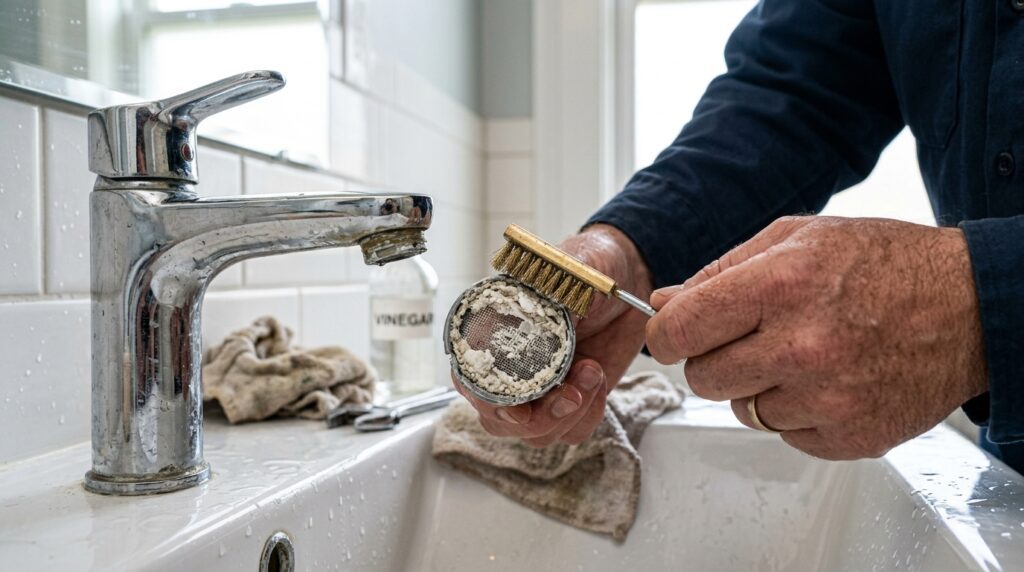
If only one faucet is weak: There’s probably a blockage right at that fixture. Mineral buildup in the aerator (the screened part at the end). Debris trapped in the line to that sink. Sometimes the shut-off valve under the sink got partially closed by mistake.
Try unscrewing the aerator and cleaning it. Sounds simple, but mineral buildup clogs these things constantly.
If your whole house has low pressure: Now you’re looking at something bigger. Could be the main water line into your home is partially clogged. Could be high pressure elsewhere in Compton’s system affecting your supply. Could be a leak somewhere that’s slowly draining pressure.
This one needs a plumber to test. They’ve got pressure gauges. They can see if your supply is genuinely low or if something’s blocking flow.
One thing people don’t realize: high water pressure is actually bad. If your pressure’s really high (over 80 PSI), it damages pipes faster. Causes leaks. So sometimes “low pressure” is actually your plumbing self-protecting.
Leaking Pipes: The Problem You Don’t See Until It’s Too Late
You’re under the sink looking for something and notice the wood feels damp. Or there’s a stain on the ceiling below the bathroom.
That’s a leaking pipe. And it’s probably been leaking for a while.
Most pipe leaks start small. A crack in the fitting. A tiny hole from corrosion. A loose connection. Water drips. Slowly. You don’t notice. Until one day you see water damage and realize it’s been happening for months.
Why pipes leak in Compton homes:
Old pipes corrode. Copper oxidizes. Galvanized steel rusts from the inside. PVC cracks. All of it happens over decades.
Ground movement stresses pipes. They shift. Connections separate. Hairline cracks form.
High water pressure puts constant stress on connections. Eventually, something gives.
Sometimes it’s corrosion eating through from the outside. Aggressive soil. Chemical exposure. You can’t see it happening, but it’s happening.
The scary part: a leak inside your wall or under your slab. You don’t see it for a long time. By the time you notice water damage, mold’s already growing. Drywall’s rotting. Structural damage is starting.
This is why ignoring “that corner feels damp” is a bad idea. Call someone early. Better to pay for a small repair than structural damage repair.
Kitchen and Bathroom Drains Keep Clogging
Your kitchen sink’s draining slower. You run the plunger. It helps for a week. Then it’s slow again.
This is Compton plumbing’s greatest hits.
Kitchen drains: People pour grease down them. Grease cools. Hardens. Sticks to the inside of the pipe. Food scraps add to it. Soap helps it coat everything. Next thing you know, water moves like molasses.
Store-bought drain cleaner? Dissolves some of it. But caustic chemicals? They can damage older pipes. Especially if you use them repeatedly.
Bathroom drains: Hair. Soap buildup. Skin cells. All of it coats the inside of the drain. Flow slows. Water starts backing up into the tub or shower.
Here’s the thing: one slow drain? Could be local. Multiple drains slow? That’s often a sewer line problem, not just the individual drains.
If your kitchen sink drains slowly, your shower’s sluggish, and your toilet’s being weird? The main sewer line’s probably clogged. Tree roots. Grease buildup in the main line. Collapsed pipe section.
That’s not a plunger situation. That needs professional drain cleaning equipment.
Sewer Backups: The Worst Plumbing Problem in Compton
Water (or worse) starts coming up through your drains instead of going down.
This is genuinely bad.
A sewer backup means sewage is backing up into your home. That’s not just gross. That’s a health hazard. Bacteria. Pathogens. Serious illness risk.
What causes sewer backups in Compton:
Tree roots love sewer pipes. They grow toward water. Once they get in, they keep growing. Eventually, roots completely block the line.
Grease accumulation. Especially if you pour grease down drains regularly. It builds up in the main line. Traps more debris. Eventually, total blockage.
Old pipes collapse. Sewer lines fail over time. Sections can crack. Collapse. Separate. This is common in older Compton neighborhoods.
Long-term neglect. Never having the system inspected. Never cleaning main lines. Eventually, it fails.
If this is happening:
Stop using water. Immediately. Every bit of water you send down increases pressure on a blocked system.
Don’t flush. Don’t shower. Don’t drain your sink.
Call a plumber right now. Not tomorrow. This is urgent.
The longer sewage sits in your home, the more contamination spreads. Mold grows. Damage spreads. Cleanup costs explode.
Slab Leaks: The Hidden Problem Eating Your Foundation
A slab leak is a pipe leak under your concrete foundation. Most people have no idea they have one until there’s actual damage.
If your home’s on a slab (many Compton homes are), pipes run through that slab. Hot water lines, cold water lines. If one leaks, water spreads under your foundation slowly.
How you’d know:
You notice a warm spot on your floor for no reason. Hot water line’s leaking under there, heating the slab.
Cracks in your flooring that weren’t there before. Water’s getting between concrete and foundation.
Your water bill suddenly jumped 30%. You’re not using more water, but a pipe’s leaking under your house. That water’s gone.
You hear water running inside the slab when you walk around. No one’s using water, but you hear trickling. That’s the leak.
The problem: slab leaks don’t get better. The water keeps flowing. It weakens the foundation. Causes settling. Cracks spread. Eventually, structural damage.
These need professional detection (ground-penetrating radar) and professional repair (usually breaking the slab and replacing the pipe, or rerouting).
Not cheap. But cheaper than ignoring it and having your foundation fail.
Can You Fix Small Problems Yourself?
Some stuff, yeah.
A slow drain clogged with hair? Plunger might help. Remove the drain stopper and fish out debris. Use a plunger aggressively.
A leaky faucet with a worn washer? You can replace the washer. Shut the water off under the sink. Disassemble the faucet handle. Replace the washer. Reassemble.
A low-flow aerator causing low pressure? Unscrew it. Clean mineral buildup. Screw it back.
Those are the safe ones.
But here’s the reality: if you’re trying these fixes repeatedly? It keeps coming back? That’s your sign to call a professional. Recurring problems mean something deeper is wrong. The main line has a blockage. The drain system’s failing. The pipe’s corroded.
Temporary fixes hide the real problem. Professional plumbers in Compton fix the actual problem, which costs more upfront but saves you thousands later.
When You Definitely Need a Professional Plumber in Compton
If any of this is happening, don’t DIY:
Water damage visible. Stains. Wet walls. Soft flooring. This means pipes have been leaking for a while. Needs inspection and repair.
Recurring problems. Same clog keeps coming back. Same slow drain. Same leak. This means the underlying issue isn’t fixed.
Sewer smells. If your drains smell like sewage, the sewer line’s probably failing. That’s not a clog. That’s a structural problem.
Multiple drains affected. Whole house slow. Multiple backups. Kitchen, bathroom, laundry all having issues. Main line problem.
Low pressure everywhere. Whole house affected. This usually means main line issue or major leak.
Sounds under the floor. Running water when nothing’s on. Gurgling from drains. Pipes moving or settling. Call a plumber.
A licensed plumber in Compton can inspect your whole system. Find the actual problems. Give you real solutions, not Band-Aids.
How to Stop These Problems Before They Start
You can’t prevent all plumbing problems. But you can reduce them.
Stop pouring grease down sinks. Seriously. Let it cool and throw it in the trash. Grease is the number-one drain killer in Compton.
Use drain strainers. Cheap. Catches hair and debris. Prevents blockages.
Check under sinks regularly. Look for moisture, soft wood, water stains. Catch leaks early.
Watch your water bills. Sudden jump means something’s wrong. Leak somewhere.
Get your system inspected every couple years. Especially if your home’s older. Professional inspection catches problems you can’t see.
Know where your shut-off valve is. And test it once a year. Make sure it works in an emergency.
Fix leaks immediately. Don’t wait. That small drip becomes a huge problem.
Use the plunger, not chemical drain cleaner. Chemical cleaners damage old pipes. Plunger’s safer.
These steps don’t eliminate problems, but they catch them early when fixes are cheaper and easier.
Frequently Asked Questions
What are the most common plumbing problems in Compton homes anyway?
Clogged drains, leaking pipes, low water pressure, sewer backups, and slab leaks. Compton homes deal with all of these because of aging pipes, ground movement, and hard water. Most of these problems develop slowly. Catch them early by inspecting regularly and not ignoring warning signs.
Why did my water pressure suddenly drop?
Could be mineral buildup in the aerator (clean it). Could be a leak somewhere reducing pressure. Could be a shut-off valve partially closed. If it’s just one fixture, it’s usually local blockage. If the whole house, it’s probably a main line issue or a leak. Needs professional testing to know for sure.
How do I know if I have a slab leak under my house?
Warm spots on floors. Cracks in the foundation or flooring. Water bill jumped for no reason. Sound of running water inside the slab when nothing’s on. Slab leaks need professional detection equipment (ground-penetrating radar). Don’t ignore these. They weaken your foundation.
Is a clogged drain serious or just annoying?
One clogged drain? Annoying but manageable. Multiple drains clogging at once? That’s your sewer line. That’s serious. Multiple backups mean the blockage is in the main line, not individual fixtures. This needs professional drain cleaning equipment.
Can I fix a leaking pipe myself?
You can temporarily patch visible leaks. But pipes usually need replacement to work properly. Temporary fixes fail under pressure. Leaking pipes damage surrounding areas while you’re waiting. Call a plumber. They’ll replace the damaged section and prevent future problems.
How often should I get my plumbing system inspected?
Yearly for homes over 30 years old. Every couple years for newer homes. Regular inspections catch corrosion, pressure problems, and early leaks before they become emergencies. This is especially important in Compton where ground movement and hard water cause problems over time.